
As we enter a new period in the Ukrainian conflict, with escalation on both sides (I mean Russia and NATO), I decided to read again my old articles, written in 2013 and later.
I then decided to share them with you today, as most of you either forget about them or did not receive them.
I share them without any ambition to prove myself right, as my most pessimistic previsions proved too optimistic. But we all should feel sorry about all the lost opportunities, all the wrong calculations repeated again and again, all the arrogance of leaders and media.
When we read those articles, we cannot ignore the thousands of soldiers and civilians who lost their life or have been crippled for ever because Russia had to be weakened and humiliated.
Unfortunately, Ukraine is not the beginning of the end, but the end of the beginning.
Posted on December 13, 2013. When the troubles just started…
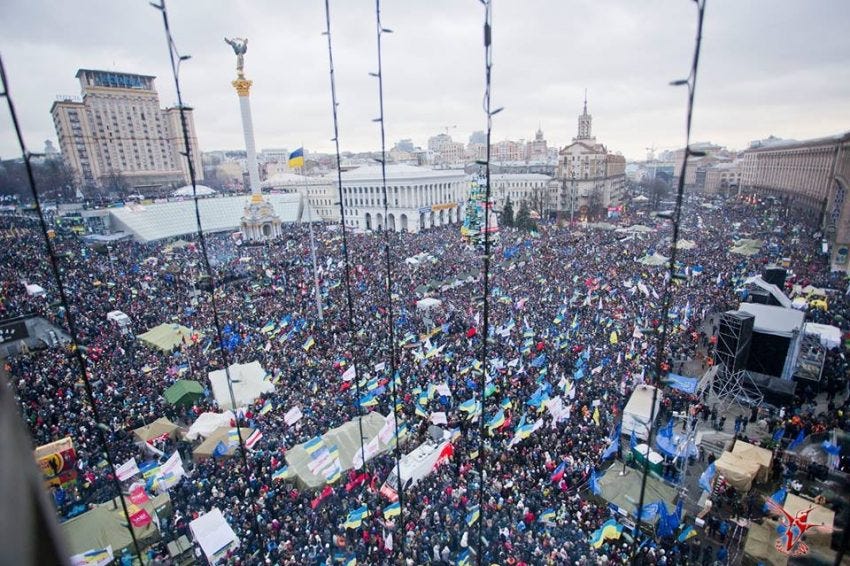
A day on the Maidan
A few weeks ago, demonstrations started in Ukraine to support the move for the country to enter into a trade agreement with the EU, and we see again trouble spreading in that country that indeed is very much at the turmoil area between zones of influence. The word Maidan itself illustrates that, as it means square or large place not only in Ukrainian, but also in Arabic, Farsi, Hindi, Turkish and many other oriental languages.
As always I wish to summarize a few ideas on the present situation, trying to avoid emotional arguments.
Unfortunately the situation again demonstrate the amateurism of western leaders, and in this case also of Ukrainian leaders. The recent support of western leaders to the Maidan movement are totally lacking basic diplomatic savvy. Several ministers or even the brilliant EU “foreign minister”, Catherine Ashton, visited Kiev, handling food to demonstrators. Let’s imagine the comments if Sergey Lavrov had visited New York to handle food to the Occupy Wall Street pickets, or if China announced tomorrow that they are ready to recognize and invest in the independent Republic of Cataluña and the Republic of Scotland in case the planned referendum next year receive a positive answer from the populations there!
But let’s be objective. What is the EU proposing to Ukraine and what can the country get out of it?
The EU is in a very weak position now, with parts of the region in bankrupt situation, while others like Germany or the UK are even thinking about leaving or dropping the Euro and a single currency. What can the EU objectively propose to Ukraine?
One option is a minimal trade agreement (what was proposed until now), with no real investment from the EU itself, but vague commitments that EU businesses shall start investing in Ukraine. This is indeed the Romanian or Bulgarian scenario, and even worst as no full membership shall be given before several years. This is an option where the low salaries and social costs shall be used by EU companies, mostly German companies, to delocalize some jobs from Eastern Europe to Ukraine, and the result shall be the same. More regulations, more costs to real local businesses, and this shall indeed damage the situation of a country that is mostly trading today with Russia and CIS countries (almost 40% of 2012 exports). Believing that Ukrainian products, in particular food and machinery equipment, shall be easily sold to EU is a dangerous illusion.
A second option is a faster integration, with even an early adoption of Euro for the Ukraine. This sounds crazy but nothing is impossible as finally all the move is motivated by a desire of expansion of the EU for political reasons, not at all economic reasons, and therefore desperate moves are not excluded. This option would be the end of Ukrainian economy and very rapid move towards a Greek situation of bankruptcy, but without the few years of heavy EU investment in infrastructures that Greece enjoyed in the beginning of the 2000’s.
On a pure economic viewpoint, Ukraine has a lot to lose in the EU partnership, not to talk about the internal political risk, with the western part of the country feeling very close to Poland and Eastern Europe, while the Eastern industrial part is Russian speaking and closer to Russia in mentalities. We should feel sorry for Ukraine and its people, as they are being manipulated today by on one side western leaders who are in search of a political win against Russia (and the BRICS in general) and Russia itself that considers the move as dangerous for Ukraine and Russia itself – be such danger real or not is in fact irrelevant now. In a way, the situation can be compared to Syria, where external powers intervene in the confrontation and make it a proxy fight, at the cost of the local populations that are put into a lose-lose situation.
Hopefully Ukraine shall not fall into the trap of an armed confrontation and a civil war, but the risk exists and nobody should ignore that, even Madam Ashton.
Posted on February 25, 2014. When the Yanukovich government fell.
Ukraine, and what now?
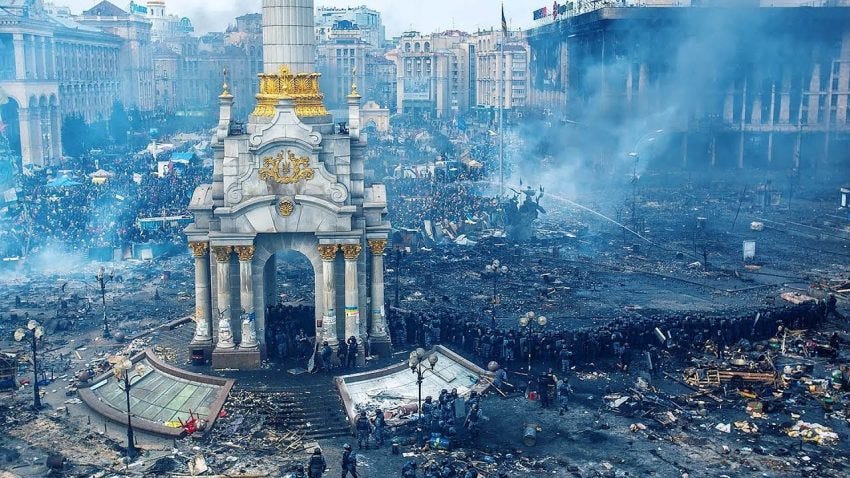
The Maidan events ended up in a very unexpected way some days ago, leaving the country a political vacuum. Dramatic events happened and the death of people is always a loss to their family and community, whatever side they belong to, and our thought go to their loved ones.
This being said, we need to look at the present situation with a practical, and if needed, cynical mindset, as many aspects of those events are far from clear.
First of all the behavior of EU (and US) leaders and media.
As a matter of fact, EU and US politics seem to have a systematic tendency to support opponents in countries that are not considered as “friendly”, and this without looking further than very short term tactics and without understanding what shall be the consequences of such support. Everybody still remember the way the US supported and trained future Al-Qaida elite in Afghanistan when the country was an ally of the Soviet Union. In much more recent events we have seen how the support to the Syrian opposition turned out to go into the hands of sharia fighters whose ultimate goal is to create an Islamic republic including Syria, Iraq and Lebanon, something that is far to be a great perspective for the future of the region and the world.
Since a few months, support was given to the Maidan movement, once again without consideration of who was part of it and indeed led many actions of the movement. Of course a majority of people in the streets were ordinary citizens of Ukraine, fed up with the corruption and the ineffective way the country was led by the Yanukovich team. And I believe this was legitimate, as the Ukrainian government (and by the way its predecessors) did not score much and showed over the last period again its incompetence. However a smaller number of protesters were there with a solid determination and the appropriate skills and tools to organize an armed revolt that would destabilize the country and allow them to impose their views. Nothing here is invented, you all have seen guys with helmets (real ones, not the cycling helmets used by the ordinary un-armed citizens that got shot on the 20 th February), bullet-proof gilets and armed with rifles or automatic weapons. I also invent nothing saying that those groups are structured, disciplined and are aligned with a number of extreme-right groups like Pravy Sektor, asking for a national revolution to get rid of the Russian and the Jew…
EU and US diplomats know that of course, but as always believe in their virtual representation of the world and think that such groups shall vanish soon, overwhelmed by the immense majority of peaceful democrats! At least I hope they honestly believe that…
But reality is extremely hard necked and I do not believe at all in such a rosy future. The country is now in a vacuum and in such situations, history shows that the winners are simply the best organized and strongest determined groups that fill the power vacuum, while good intention masses are given the choice to either follow or be named enemy of the nation.
Was the French foreign minister Laurent Fabius closing his eyes on the anti-Semite rhetoric of key members of the opposition? Did he know that in cities under the influence of such groups, monuments have been erected to celebrate the SS Division Galizien (Galice from the name of a western Ukrainian region) like this one in Lvov?
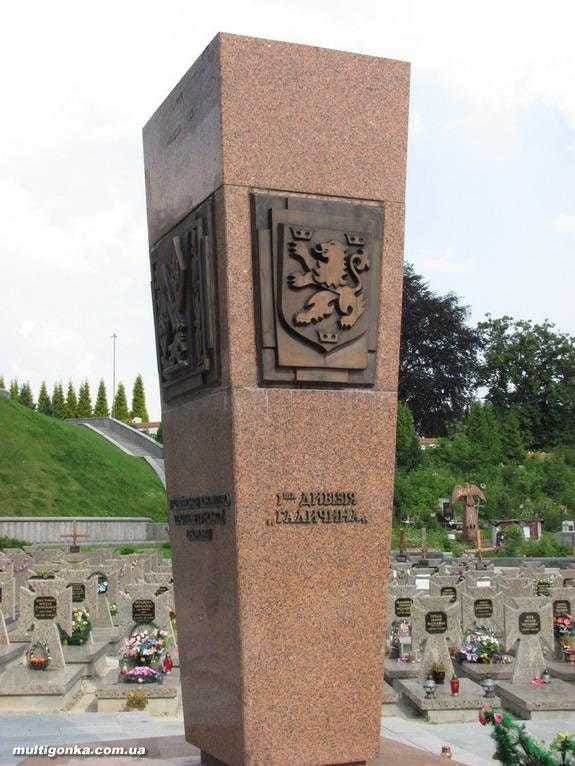
Did he know that other groups after 1941 and under the leadership of Stepan Bandera supported the Nazis and used the trouble times to “ethnically clean” the region, killing Russians, Poles and Jews? He should think about it perhaps a bit more!
Now what is next?
If Western powers want to prove their good faith in that story and show that they really care about the people in Ukraine, and not just about winning one point on the geopolitical game, they should ask for the following to be done by the new Ukrainian leaders :
– an open and international investigation to really know who shot people in the streets of Kiev in February. Police people were also killed and the dead and their families deserve to know exactly why they have been shot by snipers and who did it
– corruption investigations should be done about Yanukovich ruling period, but also about his predecessors, and results published
– actions have to be taken about extremist groups (disarming them and making them illegal, like was done in Greece)
– abandon arbitrary laws voted this week, for example imposing the use of Ukrainian and make Russian again one of official languages for the country
It is NOW that Western powers have to unite with Russia (who never was a great supporter of Yanukovich by the way) and impose the basic rules of democracy in the Ukraine, if necessary sending UN troops to ensure that freedom and fair treatment for all is ensured.
Shall they achieve that or even half of it? I let you judge by yourself.
But unless this is done, and fast, the path is clear, and it is downwards.
The country, without financial support from Russia shall go bankrupt very fast. Shall EU and the US replace that support and spend billions of Euros per months to save the country while they are themselves close to insolvability? Again judge by yourself, especially if you live in the EU and shall have the pay from your taxes at the end of the day. For US citizen, no way to fear about that as your government knows when involvement is profitable and when it is better to pass the bill to the Europeans… Counting on further support from Russia is illusion, as Russia shall not pour money in an unstable country whose leaders voice a very anti-Russian stance.
In parallel, the increase in anti-Russian feelings in the west and Kiev shall push eastern regions to declare independence and ask for Russian protection. Russia really does not need that and I believe is praying for that not to happen, but shall hardly be able to refuse as the Russian voters would not allow that and the military base in Crimea has to be protected. Economic reasons also push for a split, as most industrial activities are in the east and companies sell a majority of products to Russia, with little hope to pass EU normative requirements, that would mean a total change of production standards in case of a so called “EU integration”.
Here we go for a new Yugoslav drama, with population moves, ethnic cleansing and so on, but in a much larger scale, and with a few countries still having territory claims on parts of the Ukraine, like Hungary. And again like in Yugoslavia, remembrance of WW2 and hatred sentiments hidden for years come back to the surface.
One question remains open on my views, and this is the position of the Ukrainian armed forces. Are they following the traditional posture of the Russian army to avoid being involved in political disputes (rule broken in 1993 at the request of Boris Yeltsin), or are they too devised to act? Did Yanukovich ask for army intervention and was it turned down? Lots of work still to be done to understand what exactly happened and does happen in that 46 million people country!
Posted on March 4, 2014. Split as a last chance
Ukraine: A split to save lifes!
As events in the Ukraine are still unfolding, and rightly create a lot of emotion on all sides, let’s take a step back a look at the options.
The first thing to consider is the will of the people of Ukraine. We see many people wishing to join the EU and follow the path of Poland or Czech. But there are also people in the Ukraine who feel closer to Russia, in Crimea but also in many other places.
Now let’ forget about Russia for a while and just try to imagine the consequences of the above. What pro-EU Ukrainians want is not a simple agreement as was discussed during Yanukovich times, but they want to join the EU for good. But is the EU in a situation to accept that?
I believe the answer is a clear no, but as usual (see what happened with Turkey), EU leaders are too weak to take bold decisions and prefer to entertain hope even when there is none, an attitude that can have very bad consequences. The Ukraine is indeed a large country of around 45 million, with 2 major segments in its economy, agriculture and heavy industry. The heavy industry part is located in the eastern part of the country, the one feeling closer to Russia, and is mostly soviet times industry, obsolete on EU standards, selling a large majority of its production to…Russia. The agriculture segment is more palatable for the EU, although difficulties shall also be significant, looking at the already fragile EU agriculture and the continuous efforts of the Commission to suppress subsidies to that segment.
If you add the existing debt problems of the EU, I do not think they are ready to integrate the Ukraine. If they do for political reasons (a la East Germany), the pill may be mortal and lead to the explosion of the EU as such, as populations in Europe shall not be ready to pay for the integration. However popular the Ukrainian cause is today for many Europeans, they shall not accept more taxes for a further eastern expansion, or rather they simply do not have more money.
The Ukraine shall then more probably end up with a weak treaty with the EU, and a loss of its major customer Russia, not to talk about more expensive gas. Such a situation is not sustainable, as Eastern regions industry shall go bankrupt in a matter of months, and miners shall again take the train to Kiev, but this time not to please uncle Vitya (Yanukovich), but because their families have nothing to eat. The difference is very very big!
In other terms, the Ukraine needs to achieve two things: be integrated in the EU and keep its eastern industry alive and selling to Russia. But the two things are incompatible.
Ukrainians who want to join the EU are in a dead-end as long as the country remains in one piece. If there is a split, the western regions as a new entity become palatable for the EU, not easily, but at least with reasonable chances of success. The new country has the advantage to be homogeneous and manageable. Negotiations should be done in a way for that new Ukraine to keep an access to the sea, and integrate the city of Odessa, the nicest city on the Black Sea, that could become a favorite destination by car for many central European tourists.
Eastern Ukrainians on their side would either create a new entity of join Russia, but they could maintain their source of revenue from the industry.
Only a negotiated compromise can save the region from a war, that would anyway bring a similar result after its end, assuming it does not turn into a disaster like Syria.
It is time for Russia and the West to sit down and negotiate, push their respective allies in Ukraine to accept a compromise. Yes this is not in-line with guaranties given to Ukraine in 1994, and this shall be tough to accept for many Ukrainians, but this is the only viable solution. Again, even if Russia suddenly steps back, recognizes the Kiev government and all its decisions, the scenario shall end-up in a failure because parts of the country simply have opposite political and most importantly economical interests. At a time when several EU countries may split, like Spain or UK and may be Italy on the long term, this should not be considered as a shame. This is fact of life and nobody should die because of that!
Posted on March 18, 2014. Crimea referendum
Ukraine: Real-Time Thoughts
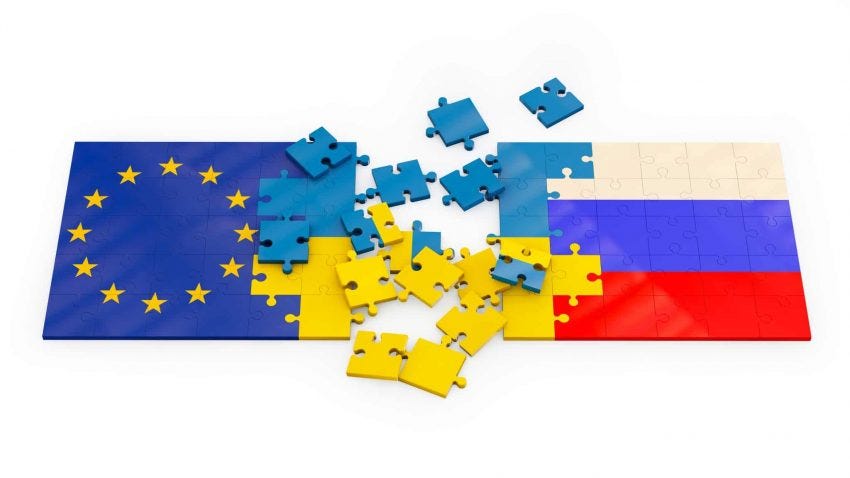
Some more thoughts about the Ukrainian crisis, after the referendum in Crimea and the expected integration of the region into the Russian Federation.
To start with, let’s consider the regular outraged claims that the referendum is illegal. What is the jurisdiction stating about the legal or illegal status of a referendum for independence? Looking at the traditional constitutional right, the question is relevant within the stable constituency of a state only. Typically we can argue pros and cons about the right of Scotland or Cataluña to initiate a referendum and declare independence, as the country it belongs to is operating normally. The same applied to Kosovo, as a matter of fact. However, if a revolution takes place in the country, it implies a suspension or cancellation of the current constitution, and in such a case it is generally recognized that regions in disagreement with the new rulers have the right to secede.
A revolution being what happened in Kiev end of February (while the application of the 21st February agreement would not be qualified as a revolution), it is legitimate for Crimea or any other region of Ukraine to secede. Russia and the EU/US call the events a revolution and agree on that point, and all should agree on the implications of such an event. Principles should be applied systematically – if there was no revolution, then Yanukovich is the only legal president, and so on.
But we should expect other developments in the south east of the country, and a lot can still happen before the planned elections in Kiev in May.
Why is Moscow acting so decisively on the issue? I believe the reason is simple: a NATO adhesion of Ukraine is simply the red line that Moscow shall not allow, whatever the cost. The Ukrainian border is too close to Moscow and would make the capital city too vulnerable to a preemptive nuclear or even conventional attack. Looking at the reaction of President Kennedy (not really a bully like Putin, right?) to the installation of Soviet missiles in Cuba in the 60’s gives an idea of the situation in Russia now and its reaction.
After years of concessions from the Russian side, after the ignored offer of Mikhail Gorbachev to suppress both NATO and Warsaw Pact to create a common European “Home”, then the several times violated commitment by the west after German re-unification not to expend NATO to the East, after the unwillingness to reach compromises in Kosovo, Libya, Syria, the red line is now in Ukraine.
As in the previous cases, a real negotiation with Russia never took place. On Ukraine, both Russia and the EU proposed economic support on exclusive basis, putting Ukraine in front of a mandatory choice – EU or Russia, while the only choice for Ukraine should be EU and Russia.
European voters should be really concerned. What their leaders are announcing is the signature of an agreement with a lot of political and economic consequences with a provisional government including suspicious members – is it a responsible behavior? Who shall pay the price for the agreement? Shall the Ukraine be the next paradise for German companies, providing qualified labor for less than Chinese salaries, starting a new boom of jobs delocalization to the east? What about a referendum in Europe asking what people think about it?
Ukrainian voters should be really concerned. Do they know that their industry shall be made obsolete in months and close down after Russia stops buying their products and the EU declares them unfit? Do they know that social benefits shall be cut (in fact already are) and poverty shall be a major issue very soon? Do they know that two Parties in their government are close to the fascist extreme right and that such parties, once in power, rarely leave it until pushed out by force? Do they really think that EU banking and industrial lobbies shall allow their countries to put sanctions on Russia that may put their investment and customer base in Russia at risk?
Talking about sanctions. The first results of the EU rhetoric about sanctioning Russia have first results :
- the ruble devaluated, without intervention of the Russian Central Bank. The result is a competitive devaluation (a la French style in the 70’s) that shall allow for a stimulation of the economy at a time of slow down. Just what was needed. But voluntary devaluations are very unpopular, and in this case Putin can say that he is not the one responsible!
- risk of freeze of Russian assets by the west generated an outflow of Russian owned capital out of the US and the EU. Although some may have gone to Switzerland or Singapore, it means the sanctions are on the way to succeed where Putin did not succeed over the past 15 years: stop capital outflow and bring Russian capital back home
- part of the repatriated capital has gone buying back shares of Russian flagship industrial groups at a very discounted price after western investors fled in panic!
Let’s History write the next chapters.
August 2026. History still writes and writes – with blood.